New towels shed because loose fibers from manufacturing work their way out during the first few washes. Wash them twice before use, use less detergent than you think, and skip the fabric softener. Here is the full step-by-step guide to stopping towel shedding for good.
Why Do New Towels Shed So Much?
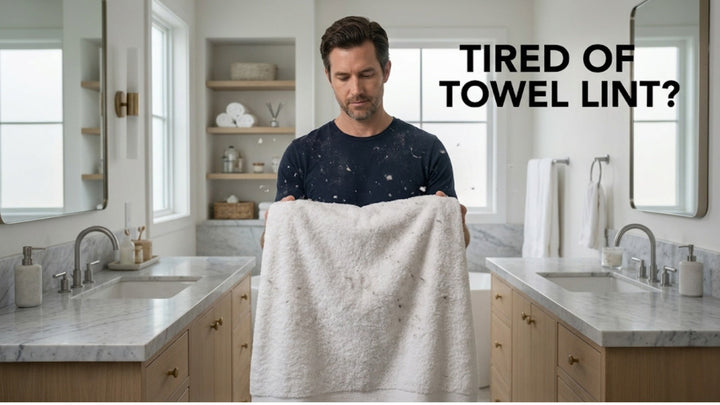
You pull your brand-new bath towels out of the dryer and your laundry room looks like a cotton snowstorm. Your dark clothes are covered in fluff. Your shower drain is clogged with tiny fibers. You are not alone — and your towels are not defective.
New towels shed because of how they are manufactured. When terry cloth is woven, thousands of tiny loops are created on the surface. During this process, short, loose fibers — called "fly" in the textile industry — get trapped between those loops. They did not make it into a full loop during weaving, so they sit loosely on the surface waiting to escape at the first opportunity. That opportunity is your washing machine.
This is completely normal, especially in the first three to five washes. Higher-quality towels made with long-staple cotton fibers, like Turkish cotton or Egyptian cotton, tend to shed significantly less than towels made with short-staple fibers — because longer fibers grip each other more securely in the weave.
The good news: towel shedding is almost always temporary. Follow the steps below and it stops.
How to Stop New Towels from Shedding: Step-by-Step
This is the method that works. Do this with every new set of towels before you use them.
Step 1 — Wash Before You Use Them (Twice)
Never use new towels straight out of the packaging. Wash them at least twice before their first use. The first wash removes the majority of loose surface fibers. The second wash catches what the first missed.
Wash on a warm cycle (not hot) with just a small amount of detergent — half your normal amount. Hot water weakens cotton fibers and can cause more shedding long-term, not less.
Step 2 — Add White Vinegar on the First Wash
Add one cup of plain white distilled vinegar to the drum (not the detergent drawer) on the very first wash. Vinegar does two things: it dissolves any manufacturing residue coating the fibers, and it naturally softens the cotton without leaving behind the waxy buildup that fabric softener does. This helps fibers settle into the weave and shed less.
Step 3 — Use Less Detergent Than You Think
One of the biggest causes of continued towel shedding — beyond the first few washes — is detergent buildup. When you use too much detergent, the residue coats the fibers, stiffens the towel, and causes loops to break and shed over time.
Use half the recommended amount of detergent for towels. They are not heavily soiled items. Less detergent means cleaner rinse, softer fibers, and less long-term shedding.
Step 4 — Never Use Fabric Softener on Towels
This is the most common towel care mistake. Fabric softener coats cotton fibers with a silicone-based film that reduces absorbency and — counterintuitively — increases shedding over time by weakening the fiber structure. Skip it entirely. White vinegar is your replacement.
Step 5 — Shake Towels Out Before the Dryer
Before putting towels in the dryer, give each one a firm shake. This loosens any lint sitting on the surface and allows it to be caught in the dryer's lint filter rather than redepositing back onto the towel.
Step 6 — Clean the Dryer Lint Filter Before Every Cycle
A clogged lint filter cannot catch new fibers coming off your towels. Before every towel drying cycle, pull the lint filter out and clear it completely. A clean filter means less lint recirculating and reattaching to the fabric.
Step 7 — Tumble Dry on Low Heat
High heat is the enemy of cotton fibers. It weakens the tensile strength of the fiber, causes loops to break prematurely, and dramatically accelerates shedding. Dry towels on low or medium heat. Yes, it takes longer. Your towels will last years longer and shed far less.
How to Remove Lint That Is Already on Your Towels
Sometimes shedding leaves visible fuzz and lint built up on the towel surface itself. Here is how to get rid of it:
Lint roller: Works well for surface fuzz on flat sections. Run it slowly across the towel surface in one direction.
Washing machine trick: Add half a cup of white vinegar to a normal warm wash with no detergent. The vinegar loosens the built-up lint, which then rinses away or collects in the filter.
Dryer trick: Run towels in the dryer on low heat with two or three wool dryer balls for 10 minutes before washing. The dryer balls agitate the towel surface and knock loose fibers into the lint filter before the wash even starts.
Do not use a razor or lint shaver on towels. These tools work on sweaters and fleece but will damage terry cloth loops permanently.
Why Black Towels Shed More Than White Ones
Black towels do not actually shed more fiber than white towels — they just show it more visibly. White lint against a dark towel is high contrast. You also notice it more on dark clothing after drying with black towels.
However, there is a second issue with dark-dyed towels: the dyeing process. Dark colors require more dye saturation, and lower-quality dark towels sometimes have a dye coating that flakes off in early washes. This looks like shedding but is actually excess dye particles. It stops after two to three washes.
For black or dark towels specifically: wash separately for the first three washes, use cold water (preserves the dye), and add one cup of white vinegar on the first wash to set the color and clear loose fiber simultaneously.
Does Vinegar Stop Towel Shedding? (The Vinegar Method Explained)
Yes — white vinegar is genuinely one of the most effective tools for stopping towel shedding, and it works for two separate reasons.
Reason 1 — It dissolves manufacturing residue. New towels are often treated with a finishing solution during production to make them look smooth and feel soft in the packaging. This coating actually prevents fibers from bonding properly in the weave. Vinegar cuts through this coating on the first wash, allowing fibers to settle and grip each other naturally.
Reason 2 — It removes detergent buildup. Detergent residue accumulates in towel fibers over dozens of washes, stiffening the loops and causing them to break and shed. A vinegar wash strips this buildup out, restoring softness and reducing ongoing shedding.
How to use it: Add one cup of plain white distilled vinegar directly to the drum at the start of a warm wash. Do not combine with detergent in the same wash — run it as a vinegar-only cycle. Once a month for regularly used towels keeps shedding at a minimum.
How to Stop Towels from Leaving Lint on Your Body
If your towels shed lint that sticks to your skin after a shower, the problem is usually one of two things: either the towel is still in its early shedding phase (wash it twice more), or the towel has accumulated a layer of loose surface fibers from not being shaken out and over-dried.
The fix:
- Wash the towels with a vinegar-only cycle (no detergent)
- Run three wool dryer balls in the dryer with towels on low heat
- Give every towel a firm snap-shake before folding
If lint on your body continues after six or more washes, the towel may have structural quality issues — short-staple fibers that will never fully bond. In that case, the shedding is unlikely to stop.
When Shedding Does Not Stop — Is It Towel Quality?
Most towel shedding resolves within the first three to five washes. If your towels are still heavily shedding after ten or more washes, the cause is almost certainly the quality of the cotton used.
Towels made with short-staple cotton — the cheaper end of the cotton spectrum — have fibers that are too short to grip each other securely in the weave. They shed continuously throughout the towel's lifetime because there is no structural fix for a short fiber. The loose fibers simply never run out.
Long-staple cotton, including genuine Turkish cotton and Egyptian cotton, uses fibers that are significantly longer. These grip each other tightly in the weave, shed minimally after the first one or two washes, and actually get softer with each wash rather than rougher.
What to look for when buying towels that will not shed:
- Long-staple or extra-long-staple cotton (listed in product specs)
- Ring-spun construction (fibers twisted tightly together)
- 500–700 GSM weight (heavier weave = more fiber security)
- Double-stitched borders (prevents edge unraveling, a major source of lint)
How to Prevent Towels from Shedding Long-Term
Once you have solved the initial shedding problem, here is how to keep it from coming back:
Wash at the right temperature. Warm for cotton towels. Not hot. Hot water breaks down fibers faster than anything else.
Wash towels separately from clothing. Mixing towels with clothes in the wash creates friction that accelerates lint transfer in both directions. Towels also need more rinsing than most clothing.
Do not overfill the washing machine. Towels need room to move freely. An overstuffed drum means insufficient rinsing, more detergent residue, and more long-term fiber breakdown.
Do not over-dry. Remove towels from the dryer while they are still very slightly damp. Over-drying on high heat is the fastest way to degrade terry loops and create chronic shedding.
Run a monthly vinegar wash. Even on established towels, a vinegar-only warm wash cycle once a month keeps detergent buildup from accumulating and fibers from breaking down.
Frequently Asked Questions About Towel Shedding
How many washes until towels stop shedding?
Most towels stop shedding significantly after two to three washes. With the vinegar method on the first wash, many towels stop shedding almost entirely by wash three or four. If a towel is still heavily shedding after ten washes, it is a quality issue that washing cannot fix.
Do all towels shed?
Yes — all new towels shed to some degree. The difference is how much and for how long. Premium long-staple cotton towels shed lightly for one or two washes then stop. Low-quality short-staple cotton towels may shed indefinitely.
Does the dryer make towel shedding worse?
Yes, if you use high heat. High heat weakens cotton fiber bonds and causes loops to break, generating more lint over time. Always dry towels on low or medium heat.
Why do my towels shed onto my dark clothes in the wash?
You are washing towels with dark clothing. Always wash towels separately. The agitation between towel loops and clothing fabric transfers lint in both directions.
Can I use dryer sheets to reduce towel shedding?
No. Like fabric softener, dryer sheets coat cotton fibers with a chemical film that reduces absorbency and weakens the fiber structure over time. Use wool dryer balls instead — they reduce static, soften fabric, and speed drying time without any chemical coating.
Why does my black towel shed white lint?
Your black towel is shedding the same amount of fiber as any other towel — you are just seeing it more clearly because of the color contrast. Wash black towels separately for the first three washes. Use cold water and add one cup of white vinegar to the first wash to set the color and clear loose fibers simultaneously.
Is towel shedding a sign of bad quality?
Some shedding on new towels is normal regardless of quality. Persistent shedding after many washes is a quality indicator — it points to short-staple cotton that was never going to bond properly in the weave. Invest in long-staple cotton towels and the problem does not recur.