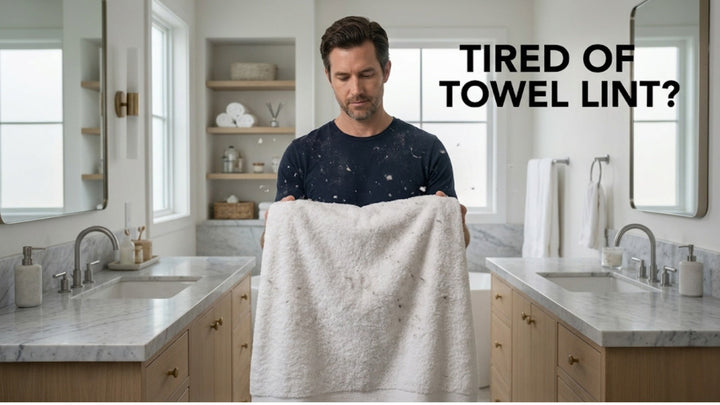
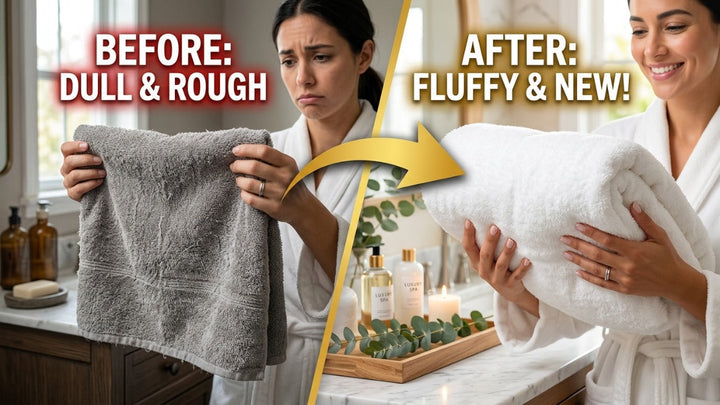
Quick Answer: Towels go stiff because of detergent buildup and hard water mineral deposits in the fibers. Fix it with one hot wash using one cup of white vinegar (no detergent), followed by a second hot wash with half a cup of baking soda. Then tumble dry on low heat. Your towels will come out soft, fluffy, and smelling fresh.
Why Do Towels Get Hard and Stiff After Washing?
You bought soft, plush towels. You have been washing them regularly. Somehow, every week that passes, they feel a little rougher, a little crunchier, a little less like towels and a little more like sandpaper.
This is one of the most common towel complaints and it has a specific, fixable cause.
The main culprit is detergent buildup. Most people use far more laundry detergent than towels actually need. The excess detergent does not fully rinse out. Wash after wash, a thin invisible film of detergent residue builds up inside the cotton fibers. This film stiffens the individual loops of the terry weave, preventing them from fluffing up the way they should after drying. The more washes, the thicker the buildup, and the stiffer the towel.
The second culprit is hard water minerals. In areas with hard water, calcium and magnesium deposits from the water supply coat cotton fibers with every wash. These mineral deposits are like microscopic gravel embedded in your towel loops — they make the fabric feel coarse, scratchy, and heavy in a bad way.
The third culprit is heat. Drying towels on high heat repeatedly breaks down the cotton fiber structure over time. The loops that make terry cloth soft and absorbent become brittle and compressed. They stop springing back open after the wash and instead lie flat, making the towel feel thin and harsh.
The good news: all three causes are reversible. Here is exactly how to fix them.
The Vinegar and Baking Soda Method to Restore Towel Softness
This is the most effective method for reviving stiff towels, and it uses two ingredients you almost certainly already have. It works by tackling both causes simultaneously — vinegar dissolves mineral deposits and detergent buildup, and baking soda deodorizes and lifts remaining residue.
Do these as two separate consecutive washes. Do not combine vinegar and baking soda in the same wash — they neutralize each other and you will get the benefit of neither.
Step 1 — The Vinegar Wash
Load your stiff towels into the washing machine. Do not add any detergent.
Add one full cup of plain white distilled vinegar directly into the drum with the towels — not the detergent drawer, not the fabric softener slot. Directly in the drum.
Set the machine to a hot wash cycle. Hot water is specifically required here because heat helps the vinegar penetrate the fiber and dissolve the mineral and detergent deposits more effectively. This is one of the rare cases where hot water is the right choice for towels.
Run the full cycle.
What the vinegar does: White vinegar is a mild acid (acetic acid). It dissolves the alkaline mineral deposits that hard water leaves in cotton fibers. It also breaks down the detergent residue coating the loops. Neither hot water alone nor detergent alone will remove these deposits — vinegar is the specific chemical solution to both problems.
Step 2 — The Baking Soda Wash
Immediately after the vinegar wash finishes — without drying the towels — run a second hot wash cycle.
This time, add half a cup of baking soda directly to the drum. Again, no detergent.
Run the full cycle.
What the baking soda does: Baking soda is a mild alkali. After the vinegar has loosened and dissolved the buildup, baking soda acts as a gentle mechanical scrubber in the wash, lifting the loosened deposits out of the fiber. It also neutralizes any remaining vinegar smell and deodorizes the towels. The combination of the two washes — acid then alkali — is more effective than either alone because they tackle the problem from two chemical directions in sequence.
Step 3 — Dry on Low Heat
Transfer the towels to the dryer immediately. Do not let them sit damp.
Set the dryer to low or medium heat only. High heat is what compressed the terry loops in the first place. Low heat allows the loops to relax and spring back open as the towel dries, which is what creates the fluffy texture.
If possible, add two or three wool dryer balls to the dryer. The balls bounce between the towels during the cycle, physically agitating the terry loops and opening them up as they dry. This single addition makes a measurable difference to the final softness.
Dry until just barely damp — not bone dry. Remove from the dryer and give each towel a firm shake. Hang or fold immediately. The residual heat will finish the drying without further loop compression.
Why You Should Never Use Fabric Softener on Towels
This is the most important towel care rule that most people get wrong.
Fabric softener makes towels feel soft when they come out of the dryer. Within a few washes, however, it makes the problem significantly worse. Here is why.
Fabric softener works by coating fabric fibers with a thin layer of lubricating chemicals — typically silicone or quaternary ammonium compounds. This coating is what creates the silky feeling. But on terry cloth towels, this coating does two damaging things:
It reduces absorbency. The coating fills in the microscopic gaps in the cotton fiber that absorb water. A towel treated with fabric softener is measurably less absorbent than the same towel without it. After enough uses with fabric softener, towels start to repel water rather than absorb it — you may notice water beading on the surface rather than soaking in.
It accelerates stiffening. The chemical coating builds up with each wash, layer upon layer. After ten or fifteen washes with fabric softener, towels feel heavy and rough in a way that the vinegar and baking soda method will eventually correct, but the buildup keeps returning faster with each subsequent softener use.
The replacement: White vinegar is a complete substitute for fabric softener in towel washes. It softens fibers naturally, leaves no coating, improves absorbency over time rather than reducing it, and removes odors rather than masking them. Add half a cup of white vinegar to the fabric softener slot (or drum) on your regular towel washes and stop using liquid fabric softener entirely.
Dryer sheets have the same problem as liquid fabric softener — replace them with wool dryer balls for towels.
How to Soften Towels in a Front Loader
Front-loading washing machines use significantly less water than top loaders, which means detergent rinses less thoroughly and buildup happens faster. If you have a front loader and stiff towels, the cause is almost certainly chronic detergent overuse combined with incomplete rinsing.
The vinegar and baking soda treatment works the same way in a front loader. Add the vinegar directly to the drum (not the detergent drawer — it will just sit there), and run on hot.
Front loader-specific adjustments:
Use even less detergent than you think. Front loaders require HE (High Efficiency) detergent and need only one to two tablespoons per load — not the full cap that most detergent brands recommend. The recommended amounts on detergent packaging are deliberately generous. For towels in a front loader, one tablespoon of HE detergent is sufficient for a normal load.
Run the towels through an extra rinse cycle after your regular wash. Front loaders' water efficiency means a standard cycle sometimes does not rinse detergent out completely. One extra rinse cycle makes a significant difference to how towels feel over time.
Run a monthly hot cycle with vinegar only and no laundry load — this cleans the drum and door seal of the front loader itself, preventing mold and detergent buildup in the machine from transferring to your towels.
The Right Way to Wash Towels to Keep Them Soft
Once you have restored your towels with the vinegar and baking soda treatment, here is the ongoing washing protocol to prevent stiffness from coming back:
Water temperature: Warm for regular washes (not hot, not cold). Hot water is hard on cotton fibers over the long term. Cold water does not rinse detergent residue effectively. Warm is the right balance for regular maintenance.
Detergent amount: Use half the amount recommended on the packaging. Towels are not heavily soiled items. They need detergent to remove skin cells and oils — not the volume required for work clothes or heavily soiled items. Half a cap is almost always enough.
Detergent type: Liquid detergent rinses out more completely than powder for towels. Powder detergent particles can lodge in terry loops and contribute to stiffness.
Load size: Wash towels in smaller loads than you think necessary. Towels are bulky and need room to move freely in the drum. An overfull machine means inadequate water circulation and poor rinsing. A half-full drum is better than a jammed-full drum.
Separate from clothes: Wash towels separately from clothing. Clothing fabrics transfer lint to towels and create friction that degrades terry loops faster. Towels also need more rinsing than most clothes.
Wash frequency: Wash bath towels after every three to four uses. Less frequent washing allows body oils and dead skin cells to build up in the fibers, which accelerates stiffening and odor. More frequent washing with too much detergent creates buildup from the other direction.
How to Dry Towels to Keep Them Fluffy
Drying technique has as much impact on towel softness as washing technique. Most towel stiffness after washing comes from the dryer, not the machine.
Always use low or medium heat. High heat is the number one cause of compressed, hard terry loops. The cotton fiber literally contracts under high heat, and repeated high-heat drying cycles cause irreversible fiber damage over time. Low heat takes longer but preserves the fiber structure that makes towels soft.
Use wool dryer balls. Two or three wool dryer balls in the dryer with towels physically separate the terry loops as they tumble, preventing them from matting together as they dry. This is the single biggest upgrade you can make to your drying routine. They also reduce drying time by 10–25%, which is a useful side benefit.
Do not over-dry. Remove towels from the dryer when they still feel very slightly damp — not wet, just not bone dry. Over-drying is when the most fiber damage occurs. The residual heat in the drum and the towels themselves will finish the drying after you remove them.
Shake before folding. Give each towel a firm, snapping shake immediately after removing from the dryer. This physically opens the compressed terry loops and makes a noticeable difference to how fluffy the towel feels.
Line drying option: Line drying is energy-efficient but leaves towels stiffer than tumble drying because the fibers dry in a fixed position without the physical agitation of a dryer. If you prefer line drying, put the towels in the dryer on low heat for just 10 minutes after they are nearly dry on the line. The brief tumble restores the softness that line drying removes.
How to Make New Towels More Absorbent
New towels sometimes feel soft but repel water rather than absorbing it. If you notice water beading on the surface of a brand-new towel, the cause is the manufacturing finish.
Towel manufacturers apply a finishing solution to towels before packaging to make them look pristine and feel smooth on the shelf. This coating, combined with any sizing agents used in the weaving process, coats the cotton fibers and reduces absorbency right out of the packaging.
The fix is the same as the softening treatment: Wash new towels twice before first use. On the first wash, add one cup of white vinegar to the drum with warm water and no detergent. On the second wash, add half a cup of baking soda with warm water and no detergent. Dry on low heat.
The vinegar dissolves the manufacturing finish. After two washes, the natural cotton fiber is exposed and the towel becomes fully absorbent — often more absorbent than it felt in the shop.
This is also why new towels shed more than established ones. The finishing solution holds loose fibers in place until the first wash. Once it dissolves, those fibers release. Two vinegar washes will handle both the absorbency and shedding issues simultaneously.
How to Deep Clean Towels That Have Been Neglected
If your towels have not been treated properly for years — heavily stiffened, grey-looking, musty-smelling, barely absorbent — a single vinegar and baking soda treatment may not be enough. Here is the deep clean protocol for seriously neglected towels.
Deep clean protocol:
Wash 1 — Hot cycle, two cups of white vinegar, no detergent. Run full cycle.
Wash 2 — Hot cycle, one cup of baking soda, no detergent. Run full cycle.
Wash 3 — Warm cycle, one tablespoon of detergent, extra rinse cycle. Run full cycle.
Dry on low heat with wool dryer balls.
After this three-wash sequence, most towels — even ones that have been washed incorrectly for years — will be measurably softer, more absorbent, and odor-free. The improvement is not always 100% — some fiber damage from repeated high-heat drying is permanent. But the improvement will be significant.
If towels are still rough and barely absorbent after the full deep clean protocol, the cotton fiber has likely deteriorated past the point of recovery. This is normal after four to six years of heavy use — towels have a finite lifespan regardless of how well you care for them.
How Often Should You Wash Bath Towels?
The right wash frequency plays a larger role in towel softness than most people realize.
Wash bath towels every three to four uses for a single user. This is the sweet spot that balances hygiene (removing body oils and dead skin cells that build up in fibers and cause odor) against over-washing (which accelerates detergent buildup and fiber wear).
If you share towels, or if anyone in the household has sensitive skin or skin conditions, wash after every two uses.
Always hang towels fully spread open between uses. A bunched-up damp towel in a pile is the fastest route to musty smell and fiber degradation. Air circulation is critical for towels to dry properly between uses.
Frequently Asked Questions About Softening Towels
Why do towels get hard after washing?
Towels get hard from two main causes: detergent buildup from using too much detergent over many washes, and hard water mineral deposits that coat the cotton fibers. High-heat drying accelerates both problems by baking the buildup into the fibers.
Does vinegar really soften towels?
Yes. White vinegar is a mild acid that dissolves both the alkaline mineral deposits from hard water and the detergent residue that coats cotton fibers. It is the most effective natural solution for restoring towel softness and works consistently across all cotton towel types.
Can I use vinegar and baking soda together in the same wash?
No. Vinegar is an acid and baking soda is a base — they neutralize each other when combined. Use them in two separate consecutive washes: vinegar first, baking soda second. Used this way, they work together effectively because the vinegar dissolves the buildup and the baking soda lifts it out.
Why does fabric softener make towels worse over time? Fabric softener coats cotton fibers with a silicone or chemical lubricant that creates a soft feeling immediately but reduces absorbency and builds up with each wash. After repeated use, the coating becomes so thick that it stiffens the fibers, reduces water absorption, and can cause towels to repel water entirely. Replace fabric softener with half a cup of white vinegar per wash.
How do I soften towels in a front-loading washing machine?
The vinegar and baking soda method works the same way — add vinegar and baking soda directly to the drum, not the detergent drawer. Use very small amounts of HE detergent on regular washes (one to two tablespoons maximum), and run an extra rinse cycle after each wash to prevent buildup.
How do hotels keep their towels so soft?
Hotels use industrial washing machines with precise detergent dosing that prevents buildup. They also use commercial-grade dryers at controlled temperatures, and many hotel laundries add a small amount of white vinegar to every wash cycle. Their towels are also replaced on a regular schedule — hotel towels are not used for years the way home towels often are.
Can I use apple cider vinegar instead of white vinegar?
Use plain white distilled vinegar only. Apple cider vinegar can leave a faint brown tint on light-colored towels and has a stronger smell that may not fully rinse out. White distilled vinegar is odorless when dry and has no color.
How many times should I wash new towels before using them?
Wash new towels at least twice before first use. On the first wash, add one cup of white vinegar with no detergent. On the second wash, add half a cup of baking soda with no detergent. This removes the manufacturing finish, maximizes absorbency, and significantly reduces initial shedding.
Will the vinegar smell stay in my towels?
No. White vinegar smell fully evaporates in the dryer. Your towels will come out smelling neutral — no vinegar scent at all.
How often should I do the vinegar wash on my towels?
Once a month for regularly used towels is ideal for preventing buildup from accumulating. If you live in a hard water area, consider every three weeks.
How long do towels last before they go permanently stiff?
With proper care — correct detergent amounts, no fabric softener, low-heat drying, monthly vinegar wash — quality towels last five to seven years and stay soft throughout. With incorrect care (too much detergent, high heat, fabric softener), even premium towels can become permanently stiff within two years.
When It Is Time to Replace Your Towels
Sometimes towels are beyond recovery. Here are the signs:
They are still rough after a full deep clean protocol. They have thinned out and lost their pile. They take significantly longer to dry you than they used to. They smell musty within a day of washing despite proper treatment. The edges are fraying and the terry loops are pulling out.
These are signs of end-of-life fiber degradation — not a care problem but a time problem. Cotton fibers have a natural lifespan. The good news is that towels cared for well give you clear signals before they fail completely, and replacing them at that point rather than continuing to use degraded towels makes a meaningful difference to how your bathroom feels every day.